Friday, March 29, 2013

Caffeine: Facts and Myths


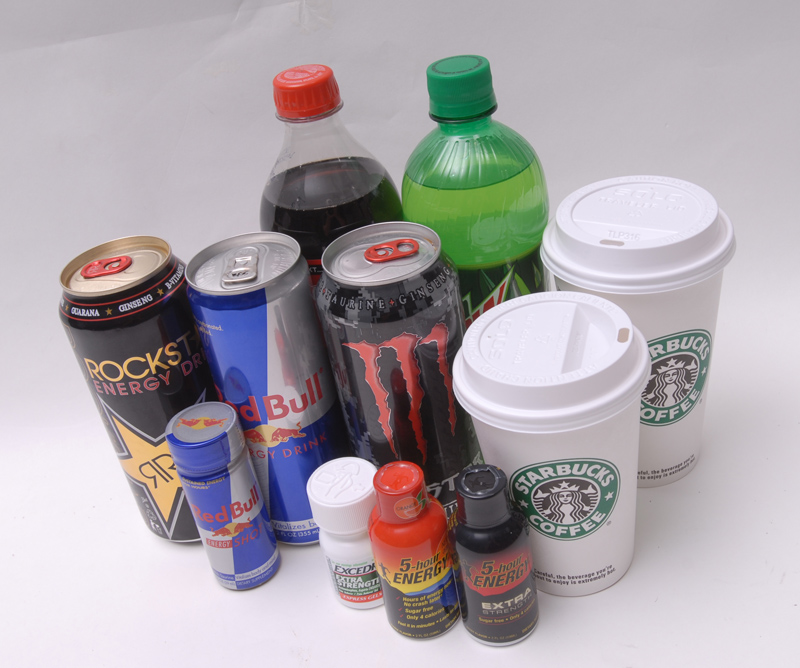
Caffeine exists everywhere, whether it be soda, coffee, or that new 5-Hour Energy drink that people are talking about.  In fact, more than 80% of Americans consume caffeine regularly.  Caffeinated energy drinks have become so mainstream that companies such as V8 and Ocean Spray are making their own versions in order to stay competitive.  

Here's a rundown on what scientists know about the world's most popular drug.

Fact: Caffeine may help sleep deprivation

In a national survey, about 30% of participants reported averaging 6 hours of sleep or less a night.  In a Roehrs' study of 259 working adults, 15% of them fell asleep within 6 minutes of entering a sleep lab.  Why does caffeine help people who are sleep deprived?  The answer to this has to deal with adenosine.

Adenosine is a natural sedative produced by the brain.  Adenosine levels build up while we are awake, and drop as we sleep.  The direct binding of adenosine to the adenosine receptors is what makes us sleepy.  Caffeine works by temporarily binding to adenosine receptors in the brain.  This prevents adenosine from binding itself to the adenosine receptors (because caffeine is already bound to it, it cannot bind to anything else).

Myth: Caffeine is bad for the heart

This fall, the parents of a 14 year old Maryland girl sued the company who makes Monster Energy drinks because their daughter suffered cardiac arrest after drinking 2 24 oz cans of Monster.  The autopsy of the girl stated "cardiac arrhythmia due to caffeine toxicity", which means the caffeine made worse a heart condition that the girl had.

However, in a study that followed more than 130,000 people for 30 years,they found that drinking coffee didn't increase the risk of cardiac arrhythmia, even among those with existing heart conditions.

Fact: Caffeine can improve physical performance

"Caffeine can improve physical performance in endurance exercise like running, but the effect is less for short bursts of movement such as lifting weights or springing," says Matthew Ganio, who is a professor of kinesiology at the University of Arkansas.

Caffeine helps people last longer during exercise because it prompts the body to burn more of its fat stores instead of the carbohydrates in our muscles.  When the muscles run out of carbohydrate, we get tired.

Matthew Ganio also says "Caffeine also reduces the perception of muscle pain and the perception of how hard we are working, which makes us feel better when exercising and may help us exercise longer."

Myth: Caffeine helps people lose weight

Many companies add caffeine to their weight-loss supplements because it speeds up the metabolic rate, as least for a short period of time.  However, there is little evidence that consuming caffeine leads to significant weight loss or helps people keep weight off.

Fact: Pregnant woman should limit their caffeine intake

The March of Dimes recommends that women who are pregnant or trying to become pregnant consume no more than 200 mg of caffeine a day because the harmful effects of more than that on the fertility, miscarriage, and fetal growth "cannot be ruled out".

The FDA advises women to avoid caffeine-containing foods and drugs if possible, or consume them only sparingly.

Myth: Caffeine increases your blood pressure

While caffeine users may experience a a slight increase in blood pressure, Rob van Dam of the National University of Singapore says "researchers have detected no substantial ink with the development of hypertension in long-term studies of caffeinated coffee intake"


Source: Nutrition Action Magazine December 2012

Thursday, February 28, 2013

Bell & Evans: The Best Chicken Patty?


Who doesn't like chicken patties?  Vegetarians.  Ok, but other then those people, I think it's safe to say that most people who eat meat like chicken patties.  I know I do.  They are crispy, delicious, and great with ketchup.  However, they have a lot of sodium.  There can be easily over 500 milligrams in each chicken patty, and that's before you add any condiments.  How can you enjoy chicken patties while keeping your sodium levels down?

Take a look at Bell & Evan's Breaded Chicken Patties.  Each patty has just 300 mg of sodium.  (The rest of the nutrition facts can be found below).  As a bonus, Bell & Evans uses chickens that have NOT been raised by antibiotics.  They believe in letting their chicken "roam free".  What are you waiting for?  Go pick up a pack today!

Nutrition Facts for Bell & Evans Chicken Patty.  


Source: Nutrition Action Magazine March 2013

Tuesday, February 26, 2013

Salad: should you wash it or not?


There are two types of bagged salad: washed, and unwashed.  The bags that say "washed" means that the companies have already washed the salad greens.  The bags without the "washed" tag means that they are unwashed.  Simple enough, right?

U.S. companies recalled bagged salad greens over 8 times in 2012 due to contamination with Listeria bacteria.  Listeria can multiply at refrigerator temperatures, and cause deadly blood poisoning or meningitis in older adults and people with weak immune systems.


Should you wash bagged greens that say "washed" on the label?  No.  Washing bagged greens that were already prewashed does no benefit, according to FDA produce-safety expert Michelle Smith.  "Once disease-causing bacteria become attached to leafy greens, it's difficult to remove them by rinsing with water."

She goes on to say "The greater likelihood is that you'll make a safe product unsafe because of cross-contamination with bacteria from your fingers, cutting boards, countertops, or the sink."

Listen to Michelle Smith.  Do not wash salad that has already been prewashed.  However, with unwashed salad, you should do as you normally would and wash them.  


Tuesday, January 15, 2013

Dried vs Fresh Herbs


Most herbs come in two forms: Dried and Fresh.  What's the difference between them?  

(Picture of Fresh Basil)


(Picture of dried basil)

Generally, fresh herbs are more expensive and potent than dried herbs.  The ratio of using fresh to dried herbs is 3-to-1.  This means that dried herbs are more concentrated because they are ground together.

Example: If a recipe calls for one tablespoon of fresh basil, but you only have dried basil, then you use one teaspoon of dried basil (three teaspoons = one tablespoon.  One teaspoon is 1/3 the amount of one tablespoon).

Dried herbs have a different flavor and aroma that fresh.  For example, dried basil has more of a smoky, deep flavor, while fresh basil is more minty and lemony.  Fresh oregano has a softer, herbaceous flavor, while dried is strong and intense.

Experiment with different herbs to see which ones you like.

Source: The Starter Cook by Linda Johnson Larsen

Thursday, January 10, 2013

How the Flu Works


The flu is one of the more dangerous infectious diseases, capable of causing over 45,000 deaths per year in the United States alone.  This year's strain of the influenza virus, H3N2, is one of the deadlier strains.  So far, 41 states have declared a public health emergency due to this virus.  The reason why this year's flu is deadlier is because the flu season started earlier.

Unlike previous years where the flu season started in January, this year's flu season started around the holidays.  The holidays is when a lot of people travel to spend time with their family.  Because of all this traveling, the flu spread more quickly than usual and infected more people.

How does the flu work? 

 The flu, scientifically known as haemophilus influenzae, is a virus.  Viruses work by infecting host cells. (A host cell is one of your cells)  First, the virus gains entry into the host cell.  Next, the virus establishes itself inside the host cell, and compromises (destroys) the cell defenses.  

Once, the defenses are destroyed, the virus assembles virion particles. (Virion particles are virus parts.  Basically what the virus is doing is making new viruses.) After the virus has assembled a lot of friends, it destroys the host cell.  Now, the virus and all it's buddies are free to roam around and infect new host cells.  This cycle repeats itself until your immune system is able to successfully fight off the virus.

If you do happen to get the flu this year, I recommend staying home, and drinking a lot of liquid to make sure you are hydrated properly.  Also, eat foods high in Vitamin C to help your body fight off the virus.  But the best thing to do if you are getting worse is to consult your doctor.  Your doctor is a trained professional whose job is to help you recover from illnesses like this.